
You’ve waited months, maybe longer, for this property to finally be ready. The developer calls you in for handover, hands you a form to sign, and it’s tempting to just sign it and move on with your life. This is exactly the moment where a lot of buyers end up regretting not slowing down for one more step.
Why This Moment Matters More Than People Realize
Once you sign the handover documents, you’re essentially telling the developer everything is fine and accepted as is. Any issues discovered after that point become a lot harder to get fixed, since you’ve already confirmed you accepted the property in its current condition. A proper handover inspection happens before that signature, giving you a real chance to catch problems while the developer is still on the hook to fix them.
Think about someone who moves in excited, only to notice a few weeks later that a bathroom tap leaks or a door doesn’t close properly. If these issues weren’t documented at handover, getting the developer to take responsibility becomes a much longer, more frustrating conversation than it needed to be.
What Actually Gets Checked
A proper inspection at this stage covers a lot more than a quick walk through each room. It includes checking plumbing fixtures for leaks or pressure issues, testing electrical outlets and switches, looking at door and window seals, checking for cracks or uneven finishing, and making sure air conditioning and other installed systems are actually working the way they should.
This matters because a lot of these issues aren’t obvious just by looking. A tap might look fine but have weak water pressure. An outlet might appear normal but not actually be wired correctly. These are the kinds of details a trained eye catches that most buyers walking through on their own would miss entirely.
Why Dubai Handovers Have Their Own Considerations
Property handovers work a bit differently depending on where you are, and Dubai has its own specific processes and expectations that buyers should understand going in. Working with a provider who specifically handles handover inspection in dubai properties means they already understand local developer practices, common construction issues in the region, and how the handover documentation process typically works here.
This local familiarity actually makes a real difference. An inspector who’s done hundreds of handovers across Dubai developments has usually seen the recurring issues that come up with certain building types or developers, which means they know exactly what to look for rather than starting from scratch on every single job.
The Difference Between Handover and Pre-Handover Inspections
Here’s something worth understanding clearly. A pre handover inspection happens before you’re actually called in for the official handover appointment, often while the developer is still finishing up work on the unit. This gives you an earlier opportunity to flag issues, sometimes before the property is even fully complete.
The advantage here is timing. Catching a problem during a pre-handover inspection means the developer often has more flexibility to fix it before the official handover date, rather than scrambling to address something on the day you’re meant to be signing off and collecting keys.
A Realistic Walkthrough of How This Usually Goes
Picture a buyer who’s purchased an apartment in a new development. The developer schedules the handover appointment and hands over a checklist to review on the spot. Without any outside help, most buyers spend maybe twenty minutes walking through rooms, checking that things generally look fine, and then signing off because everything seems okay at a glance.
Now compare that to someone who brings in a professional beforehand. The inspector spends a few hours testing every fixture, checking for hidden issues behind finishes, and documenting anything that needs attention with photos and a detailed report. That buyer walks into their actual handover appointment already knowing exactly what needs to be fixed, rather than hoping nothing’s wrong.
What Happens If Issues Are Found
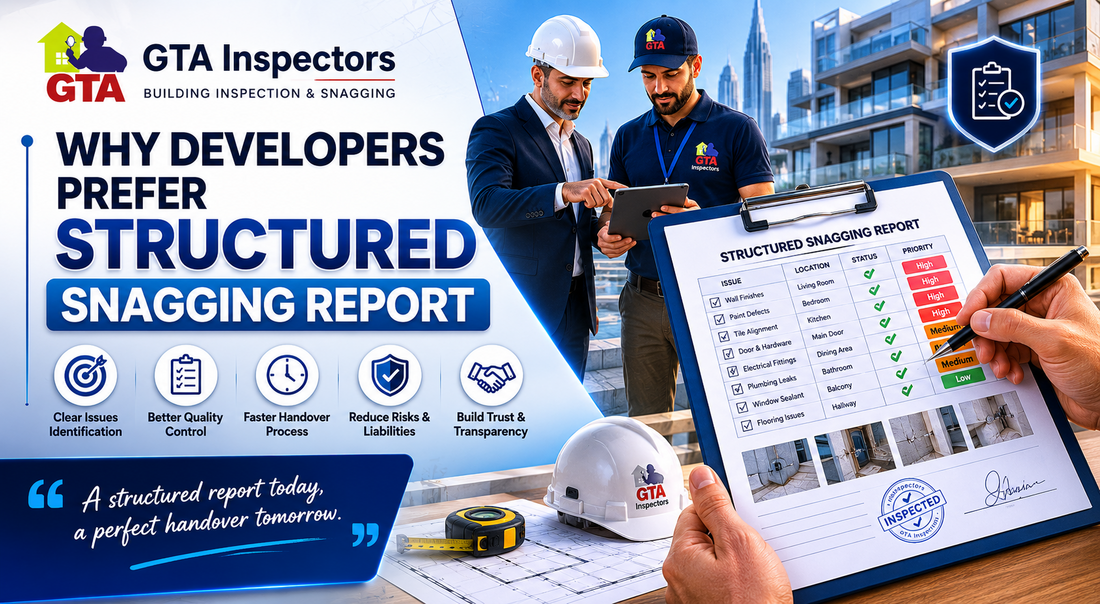
Finding problems isn’t necessarily bad news, it’s actually the entire point of doing this before signing off. Once issues are documented, they typically get added to what’s often called a snagging list, which the developer is expected to address before final handover is considered complete. This process is closely related to broader defect analysis inspection work, since identifying the root cause of an issue properly is what actually gets it fixed correctly rather than just patched over.
Having this documented clearly also protects you down the line. If a similar issue resurfaces later, you’ve got a paper trail showing it was flagged and supposedly addressed, which matters if you ever need to hold anyone accountable.
Why This Isn’t Just About New Builds
While handover inspections are most commonly associated with new developments, the same logic applies to any situation where you’re formally taking possession of a property, including certain resale transactions where a handover process is part of the agreement. The core idea stays the same. Document the condition before you’re on record accepting it.
Setting Realistic Expectations
Even well built properties usually have a handful of minor issues at handover. This is fairly normal and not necessarily a sign of poor construction. What matters is having these things properly documented and addressed rather than discovering them months later when they’ve become your problem to fix instead of the developer’s.
GTA Inspectors has handled handover inspections across a wide range of Dubai developments, working directly with buyers to make sure issues are caught and documented before they become the buyer’s responsibility instead of the developer’s.
FAQs
1. How long does a handover inspection usually take?
This depends on the size of the property, but most residential units take a few hours to inspect thoroughly.
2. Can I still get issues fixed if I’ve already signed the handover documents?
It becomes significantly harder, which is exactly why doing the inspection before signing is so important.
3. What’s included in a typical snagging list?
It usually covers anything from minor cosmetic issues to functional problems with plumbing, electrical, or fittings that need to be addressed by the developer.
4. Is a pre-handover inspection necessary if I’m already getting a handover inspection?
It’s not always necessary, but doing both gives you two separate opportunities to catch issues, especially useful if the property was still being finished closer to handover.
5. Do developers usually cooperate with fixing issues found during inspection?
Most reputable developers expect and accommodate this process, since addressing issues before final handover is standard practice in most developments.
6. Should I attend the inspection in person?
It’s not required, but being present lets you see issues firsthand and ask questions directly as they come up.
Get in Touch
If you’re approaching handover on a new property, it’s worth getting a proper inspection done before you sign anything.
GTA Inspectors
UAE Office GTA Property Observer Suite 113, Al Mashreq Building 101, Fahidi Street, Al Suq Al Kabeer, Dubai, UAE
Phone: +971 4 576 5420
Mobile: +971 52 519 2004
Email: info@gtainspectors.ae